
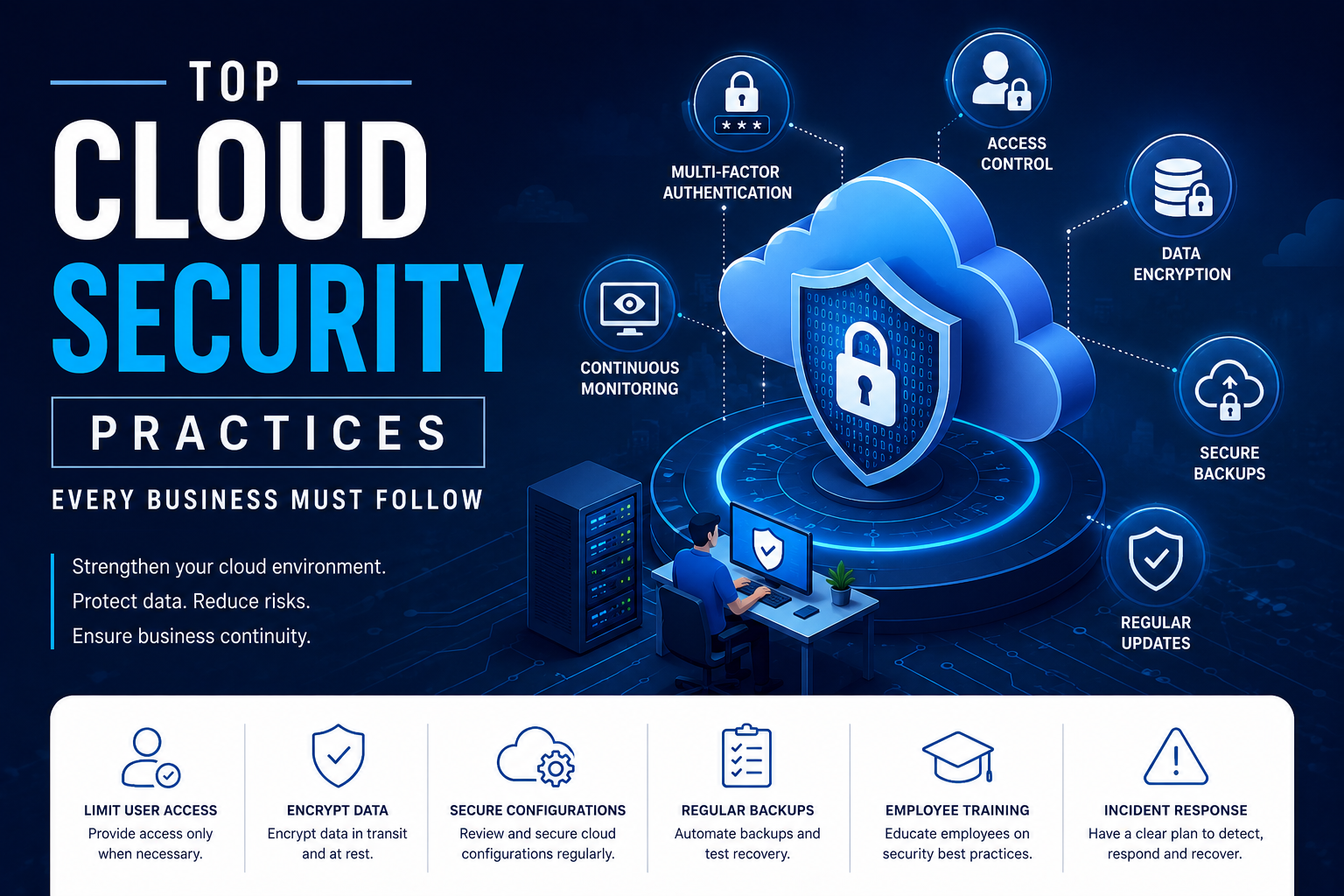
Cloud computing has transformed the way businesses operate. Companies of all sizes now use cloud platforms to store data, run applications, collaborate remotely, and scale their operations quickly. While the cloud offers flexibility, cost savings, and improved performance, it also introduces new security challenges.
Cyberattacks, ransomware, phishing attempts, and data breaches are becoming more sophisticated every year. As businesses migrate more critical workloads to the cloud, protecting sensitive information is no longer optional—it’s a business necessity.
The good news is that cloud security isn’t just the responsibility of cloud service providers. Businesses must also implement strong security practices to protect their applications, data, users, and cloud infrastructure.
In this guide, we’ll explore the top cloud security practices every business should follow to reduce risks, improve compliance, and build a secure cloud environment.
What Is Cloud Security?
Cloud security refers to the technologies, policies, processes, and controls used to protect cloud-based applications, data, infrastructure, and users.
It includes measures that safeguard cloud environments from:
- Data breaches
- Unauthorized access
- Malware attacks
- Insider threats
- Account hijacking
- Distributed Denial-of-Service (DDoS) attacks
An effective cloud security strategy helps businesses maintain confidentiality, integrity, and availability while ensuring compliance with industry regulations.
Why Cloud Security Matters
Modern organizations store valuable business information in the cloud, including:
- Customer data
- Financial records
- Employee information
- Intellectual property
- Business applications
Without proper protection, cybercriminals can exploit vulnerabilities and cause financial losses, reputational damage, and legal consequences.
Strong cloud security helps businesses:
- Protect sensitive information
- Maintain customer trust
- Meet regulatory requirements
- Reduce operational risks
- Ensure business continuity
Investing in cloud security today helps prevent costly incidents in the future.
Top Cloud Security Practices Every Business Should Follow
1. Use Multi-Factor Authentication (MFA)
Passwords alone are no longer enough to protect business accounts.
Multi-Factor Authentication (MFA) requires users to verify their identity using two or more authentication methods, such as:
- Password
- Mobile authentication app
- SMS verification
- Biometric authentication
- Hardware security key
Even if a password is compromised, MFA significantly reduces the risk of unauthorized access.
2. Encrypt Sensitive Data
Encryption converts data into unreadable information that can only be accessed with the correct encryption key.
Businesses should encrypt:
- Data stored in the cloud
- Data transferred over networks
- Database backups
- Sensitive customer information
Encryption protects confidential data even if attackers gain access to storage systems.
3. Implement Strong Access Controls
Not every employee requires access to every system.
Businesses should follow the Principle of Least Privilege (PoLP), giving users access only to the resources necessary for their roles.
Access control measures include:
- Role-based access control (RBAC)
- Identity and Access Management (IAM)
- Temporary privileged access
- Regular permission reviews
Limiting access reduces the chances of accidental or malicious misuse.
4. Keep Software and Systems Updated
Outdated software often contains security vulnerabilities that cybercriminals can exploit.
Businesses should regularly update:
- Operating systems
- Cloud applications
- Security software
- APIs
- Databases
Automated patch management helps ensure systems remain protected against newly discovered threats.
5. Perform Regular Data Backups
Data loss can occur due to cyberattacks, accidental deletion, hardware failures, or natural disasters.
Regular backups help businesses recover quickly.
Best practices include:
- Automated backups
- Encrypted backup storage
- Multiple backup locations
- Regular recovery testing
A reliable backup strategy minimizes downtime and protects business continuity.
6. Monitor Cloud Activity Continuously
Cloud environments generate valuable security logs.
Continuous monitoring helps detect:
- Suspicious login attempts
- Unauthorized access
- Configuration changes
- Malware activity
- Network anomalies
Real-time monitoring allows security teams to respond before small issues become major incidents.
7. Secure Cloud Configurations
Many cloud security incidents result from misconfigured cloud resources.
Businesses should regularly review:
- Storage permissions
- Firewall rules
- Network settings
- Identity policies
- Public access permissions
Routine configuration audits reduce security risks significantly.
8. Train Employees on Cybersecurity
Human error remains one of the leading causes of security breaches.
Employees should understand how to:
- Identify phishing emails
- Create strong passwords
- Handle sensitive information
- Report suspicious activities
- Follow company security policies
Regular cybersecurity awareness training creates a stronger security culture.
9. Use Secure APIs
Applications frequently communicate using APIs.
Poorly secured APIs can expose sensitive business data.
Businesses should:
- Authenticate API users
- Encrypt API traffic
- Validate user requests
- Monitor API usage
- Limit API permissions
Securing APIs strengthens the overall cloud environment.
10. Develop an Incident Response Plan
Despite strong security measures, incidents can still occur.
Every organization should have a documented incident response plan that includes:
- Threat detection
- Containment procedures
- Recovery steps
- Internal communication
- Customer notifications
- Post-incident analysis
A prepared response minimizes damage and speeds recovery.
Common Cloud Security Threats
Understanding common threats helps businesses prepare better defenses.
Some of the most common cloud security risks include:
- Phishing attacks
- Ransomware
- Insider threats
- Weak passwords
- Data breaches
- Malware infections
- Misconfigured cloud storage
- DDoS attacks
- Credential theft
Recognizing these threats allows organizations to strengthen their security posture.
Cloud Security Compliance
Many industries must comply with strict data protection regulations.
Depending on the business, compliance may include:
- GDPR
- HIPAA
- PCI DSS
- ISO 27001
- SOC 2
Meeting compliance standards not only protects sensitive data but also builds trust with customers and business partners.
Cloud Security Best Practices for Startups
Startups often operate with limited IT resources, making cloud security even more important.
Recommended practices include:
- Enable MFA from day one.
- Choose reputable cloud providers.
- Encrypt customer data.
- Use secure cloud storage.
- Automate backups.
- Monitor cloud activity regularly.
Starting with strong security practices prevents future vulnerabilities as the business grows.
Cloud Security Best Practices for Enterprises
Large organizations typically manage multiple cloud environments and thousands of users.
Enterprise security strategies should include:
- Centralized Identity and Access Management (IAM)
- Zero Trust security architecture
- Continuous vulnerability assessments
- Security automation
- Compliance monitoring
- Disaster recovery planning
These measures help enterprises manage complex cloud environments securely.
Why Businesses Choose Kridyx Infotech
Implementing cloud security requires more than installing security software. Businesses need a strategic approach that combines technology, expertise, and continuous monitoring.
Kridyx Infotech helps organizations build secure and resilient cloud environments through comprehensive cloud security services.
The company specializes in:
- Cloud security consulting
- Cloud migration services
- Identity and Access Management (IAM)
- Cloud infrastructure security
- DevOps and security automation
- Compliance support
- Cloud monitoring and optimization
- Digital transformation services
By understanding each client’s unique business requirements, Kridyx Infotech designs security solutions that protect critical assets while supporting business growth.
Whether you’re securing a startup application or protecting enterprise cloud infrastructure, the team delivers scalable, future-ready security solutions.
Final Thoughts
Cloud computing offers incredible opportunities for innovation, scalability, and business growth. However, these benefits can only be fully realized when organizations prioritize cloud security.
By implementing practices such as multi-factor authentication, encryption, strong access controls, continuous monitoring, employee training, and regular backups, businesses can significantly reduce cybersecurity risks and strengthen their cloud environments.
Cloud security is not a one-time project—it is an ongoing process of monitoring, improving, and adapting to emerging threats.
Partnering with an experienced technology company like Kridyx Infotech ensures your organization adopts industry best practices, secures its cloud infrastructure, and confidently embraces digital transformation while protecting valuable business data.
1 comment on “Top Cloud Security Practices Every Business Must Follow”