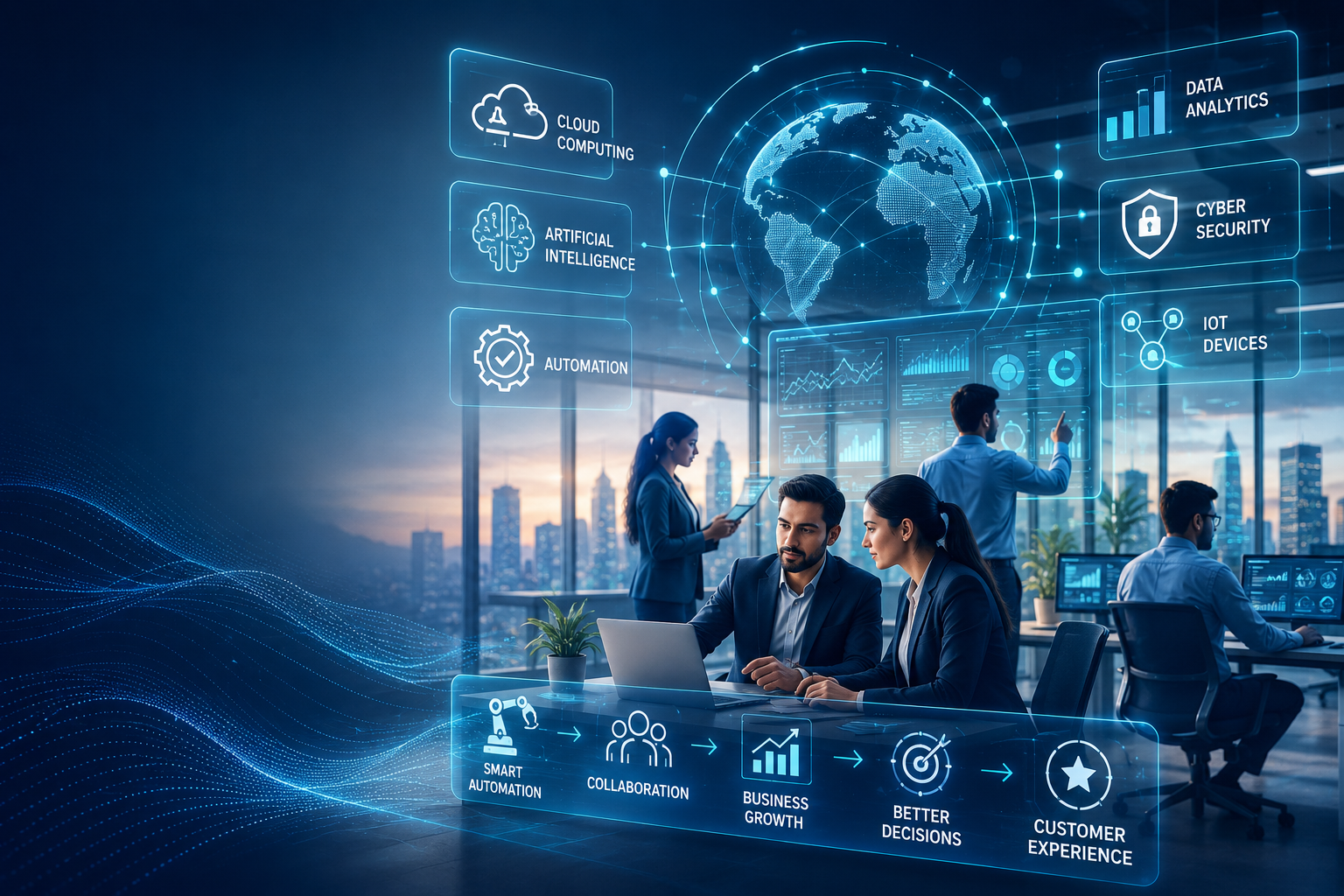
Technology is evolving faster than ever, and businesses that embrace innovation are gaining a significant competitive advantage. In 2026, digital technologies are no longer optional—they are essential for improving efficiency, enhancing customer experiences, and driving sustainable growth. From artificial intelligence and cloud computing to automation and data analytics, technology is transforming how organizations operate every day.
Whether you’re a startup looking to scale or an established enterprise modernizing legacy systems, adopting the right technologies can help streamline operations, reduce costs, and make better business decisions.
In this article, we’ll explore how technology is reshaping business operations in 2026 and why companies should invest in digital transformation to stay ahead of the competition.
The Rise of Digital-First Businesses
Modern businesses are shifting away from traditional processes and embracing digital-first strategies. Instead of relying on manual workflows and outdated systems, organizations are adopting cloud-based applications, automation tools, and AI-powered solutions to improve productivity.
This shift allows businesses to respond faster to customer needs, adapt to market changes, and innovate more efficiently.
Companies that prioritize digital transformation are better positioned to compete in an increasingly connected world.
Artificial Intelligence Is Driving Smarter Decisions
Artificial Intelligence (AI) has become one of the most influential technologies in business operations.
Instead of simply automating repetitive tasks, AI now helps organizations analyze data, predict trends, and support strategic decision-making.
Businesses use AI for:
- Customer support chatbots
- Predictive analytics
- Sales forecasting
- Fraud detection
- Personalized recommendations
- Intelligent document processing
As AI continues to improve, businesses can make faster and more accurate decisions based on real-time insights.
Cloud Computing Enables Flexible Growth
Cloud computing has become the foundation of modern IT infrastructure.
Instead of investing heavily in physical servers, businesses now use cloud platforms to access computing resources whenever needed.
Cloud solutions provide:
- Lower infrastructure costs
- Easy scalability
- Remote access
- Improved collaboration
- Faster application deployment
- Reliable disaster recovery
These advantages allow businesses to remain agile while supporting long-term growth.
Automation Is Improving Operational Efficiency
Automation is helping organizations eliminate repetitive manual tasks and improve overall productivity.
Businesses now automate processes such as:
- Invoice processing
- Customer onboarding
- Email workflows
- Inventory management
- HR operations
- Software deployment
As a result, employees spend more time on strategic work while organizations reduce operational costs and improve accuracy.
Data Analytics Supports Better Business Decisions
Every business generates valuable data, but the real advantage comes from understanding and using it effectively.
Modern analytics platforms help organizations monitor:
- Customer behavior
- Sales performance
- Market trends
- Employee productivity
- Operational efficiency
Real-time dashboards provide actionable insights that support faster and more informed decision-making.
Companies that embrace data-driven strategies often outperform competitors because they can identify opportunities and respond quickly to changing market conditions.
Cybersecurity Is More Important Than Ever
As businesses rely more heavily on digital technologies, protecting sensitive information becomes increasingly critical.
Cybersecurity strategies now include:
- Multi-factor authentication
- Data encryption
- Identity and Access Management (IAM)
- Cloud security
- Threat monitoring
- Employee security training
Strong cybersecurity protects customer data, maintains business continuity, and strengthens brand reputation.
Remote and Hybrid Work Continue to Grow
Technology has permanently changed the way people work.
Cloud collaboration platforms, video conferencing tools, and secure remote access allow employees to work from anywhere.
Businesses benefit from:
- Greater workforce flexibility
- Improved employee satisfaction
- Access to global talent
- Lower office infrastructure costs
Hybrid work models continue to shape modern business operations in 2026.
Customer Experience Has Become a Business Priority
Today’s customers expect fast, personalized, and seamless experiences across every interaction.
Technology helps businesses improve customer engagement through:
- AI-powered chatbots
- CRM platforms
- Personalized marketing
- Self-service portals
- Mobile applications
- Omnichannel communication
Delivering exceptional customer experiences leads to higher satisfaction, increased loyalty, and stronger revenue growth.
DevOps Accelerates Software Delivery
Businesses developing software increasingly rely on DevOps practices to improve speed and quality.
DevOps enables organizations to:
- Automate software testing
- Streamline deployments
- Improve collaboration
- Reduce downtime
- Deliver updates faster
Continuous Integration (CI) and Continuous Delivery (CD) allow businesses to release new features more frequently while maintaining application reliability.
Internet of Things (IoT) Connects Business Operations
IoT technology allows devices, sensors, and equipment to communicate in real time.
Businesses use IoT to:
- Monitor manufacturing equipment
- Track shipments
- Manage inventory
- Optimize energy consumption
- Improve predictive maintenance
Connected devices provide valuable data that improves operational efficiency and reduces unnecessary costs.
Custom Software Is Replacing Generic Solutions
Many organizations are moving away from off-the-shelf software in favor of custom-built applications.
Custom software offers:
- Tailored functionality
- Better scalability
- Improved security
- Seamless integration
- Higher productivity
By addressing unique business requirements, custom software helps organizations gain a competitive advantage.
Industries Leading Digital Transformation
Technology is transforming nearly every industry.
Healthcare
Healthcare providers use AI, cloud computing, and electronic health records to improve patient care and operational efficiency.
Financial Services
Banks use automation, fraud detection systems, and digital payment platforms to deliver secure financial services.
Retail and E-commerce
Retailers personalize shopping experiences through AI, analytics, and cloud-based commerce platforms.
Manufacturing
Manufacturers automate production, monitor equipment remotely, and optimize supply chains using IoT and AI.
Logistics
Logistics companies improve route planning, shipment tracking, and fleet management through cloud technologies and real-time analytics.
Challenges Businesses Must Overcome
Although technology provides tremendous opportunities, organizations also face several challenges.
These include:
- Legacy systems
- Cybersecurity threats
- Skill shortages
- Integration complexity
- Budget constraints
- Resistance to organizational change
A well-planned digital transformation strategy helps businesses address these challenges successfully.
Preparing Your Business for the Future
Organizations should focus on long-term technology investments that align with business goals.
Successful businesses continuously:
- Evaluate emerging technologies.
- Invest in employee training.
- Modernize legacy systems.
- Strengthen cybersecurity.
- Improve customer experiences.
- Use data for decision-making.
- Embrace cloud computing and automation.
Businesses that adapt quickly will be better prepared for future market changes.
Why Businesses Choose Kridyx Infotech
Technology adoption requires strategic planning, technical expertise, and continuous support.
Kridyx Infotech helps businesses modernize operations through innovative digital solutions tailored to their unique requirements.
The company specializes in:
- AI-powered business solutions
- Custom software development
- Cloud migration services
- DevOps implementation
- Cloud security
- Data analytics
- Digital transformation consulting
- IT staffing and dedicated development teams
By combining advanced technologies with industry expertise, Kridyx Infotech helps organizations improve efficiency, reduce costs, and accelerate business growth.
Whether you’re implementing AI, migrating to the cloud, or modernizing existing systems, Kridyx Infotech delivers scalable technology solutions that support long-term success.
Final Thoughts
Technology is fundamentally changing how businesses operate in 2026. Artificial intelligence, cloud computing, automation, data analytics, DevOps, and cybersecurity are no longer emerging trends—they are essential tools for business success.
Organizations that invest in the right technologies can improve operational efficiency, deliver better customer experiences, reduce costs, and respond quickly to changing market demands.
The key is adopting a clear digital strategy that aligns technology investments with business objectives.
Partnering with an experienced technology company like Kridyx Infotech ensures your business stays ahead of technological advancements while building secure, scalable, and future-ready solutions for sustainable growth.