
Software development has changed a lot over the ten years. These days businesses can not afford to release updates every months. Instead customers want features they want the bugs to be fixed quickly and they want the applications to be reliable and delivered all the time. To meet these expectations organizations need to make their development processes better while keeping the quality and security high.
This is where DevOps automation comes in and it plays an important role.
DevOps automation reduces the amount of work by automating the tasks that are repeated over and over across the software development lifecycle. From integrating the code and testing it to deploying it and managing the infrastructure automation helps the teams deliver the software faster reduce the errors and improve the way they work together.
Whether you are a startup building your application or a big company managing complex software systems DevOps automation can make a big difference in how fast you develop and how efficient your operations are.
In this guide we will explore what DevOps automation is, how it works, what the benefits are and why it is so important for software development.
What Is DevOps Automation?
DevOps automation is the practice of using tools and scripts to automate the tasks that are repeated over and over in software development and IT operations.
Of manually setting up the servers running the tests or deploying the applications the automated systems do these tasks consistently and efficiently.
Automation is used in every stage of the DevOps lifecycle, including:
- Code integration
- Software testing
- Setting up the infrastructure
- Deploying the application
- Monitoring
- Security checks
By reducing the work businesses can deliver the software faster while reducing the risks.
Why DevOps Automation Matters?
The traditional way of developing software often involves processes that take a lot of time and increase the chances of errors.
For example:
- Manual deployments can introduce mistakes in the configuration.
- Delayed testing can allow bugs to reach production.
- Inconsistent server configurations can cause the application to fail.
DevOps automation gets rid of many of these challenges by standardizing the workflows and making sure they are executed consistently.
As a result the teams spend time on the tasks that are repeated over and over and more time building new features.
How DevOps Automation Works?
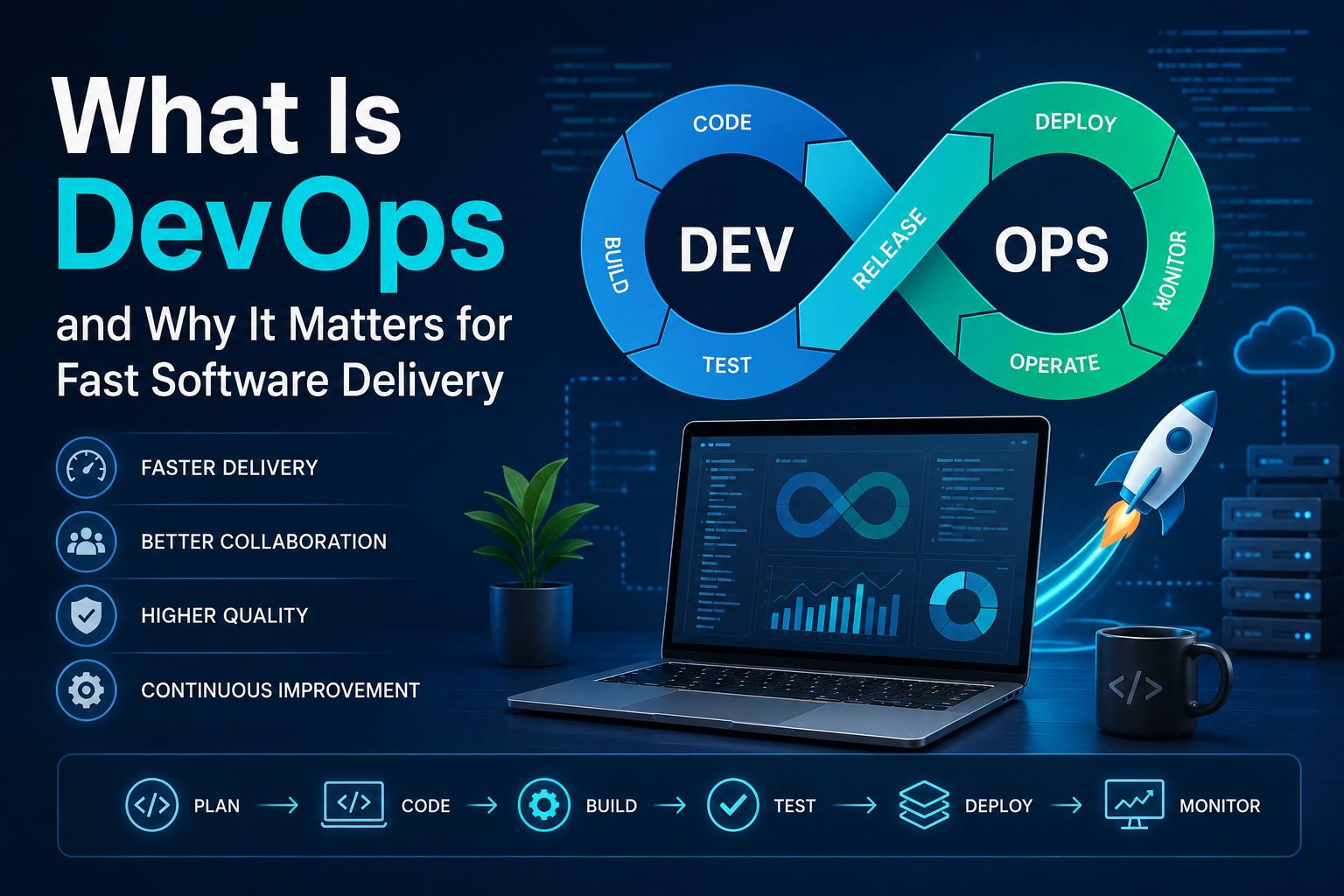
DevOps automation connects the development, testing, deployment and operations into a workflow.
A typical automated process includes:
- Developers write the code.
- The code is automatically integrated into a repository.
- Automated tests verify the functionality.
- The successful builds are deployed automatically.
- The applications are continuously monitored.
- The performance insights guide the improvements.
This automated pipeline enables the businesses to release the software while keeping the quality and stability high.
Key Benefits of DevOps Automation
Faster Software Delivery
One of the advantages of DevOps automation is the faster release cycles.
Automation speeds up the tasks such as:
- Compiling the code
- Testing
- Deploying
- Setting up the infrastructure
of waiting for days or weeks for the software releases the businesses can deploy the updates many times a day if needed.
This faster delivery helps the organizations respond quickly to the customer feedback and the market demands.
Reduced Human Errors
The manual processes often introduce mistakes that can delay the releases or affect the application performance.
Automation follows the predefined workflows making sure the tasks are completed consistently every time.
This reduces:
- Configuration errors
- Deployment failures
- Manual testing mistakes
- Infrastructure inconsistencies
Consequently the businesses experience reliable software deployments.
Improved Collaboration
DevOps automation encourages the developers, operations teams, quality assurance engineers and security professionals to work using the shared processes.
The automated workflows provide visibility into every stage of the development.
As the communication improves the teams resolve the issues faster. Deliver better software.
Better Software Quality
The automated testing ensures that every code change is validated before deployment.
The common automated tests include:
- Unit testing
- Integration testing
- Performance testing
- Security testing
- Regression testing
Because the issues are identified early the businesses release stable and reliable applications.
Continuous Integration and Continuous Delivery
Automation is the foundation of Continuous Integration and Continuous Delivery.
Continuous Integration automatically combines the code changes from developers into a shared repository.
Continuous Delivery prepares the software for deployment through automated testing and release pipelines.
Together CI/CD enables the businesses to release the software consistently.
Faster Infrastructure Provisioning
Setting up the servers manually can take hours or even days.
With Infrastructure as Code the businesses automatically. Configure the cloud infrastructure using the code.
The benefits include:
- Faster deployment
- Consistent environments
- scaling
- Simplified maintenance
The infrastructure automation supports both cloud-native and hybrid environments.
Core Areas of DevOps Automation
Code Integration
The automation continuously merges the code changes into the development branch.
This reduces the integration conflicts. Ensures that the applications remain stable throughout the development.
Automated Testing
The testing automation validates the software after every code update.
Of waiting until the end of the development the issues are detected immediately.
This approach improves the software quality while reducing the debugging time.
Automated Deployment
The deployment automation allows the applications to move from development to production with manual effort.
The businesses can release the updates faster while minimizing the downtime.
Infrastructure Automation
The infrastructure automation manages:
- machines
- Containers
- Networks
- Storage
- Cloud resources
This ensures environments across the development, testing and production.
Monitoring and Alerts
The automation continues after the deployment.
The monitoring tools track:
- System performance
- Application availability
- Security events
- User activity
- Resource usage
The automated alerts notify the teams immediately when the issues occur allowing for resolution.
Popular DevOps Automation Tools
There are industry-leading tools that support DevOps automation.
The common tools include:
- Jenkins for Continuous Integration
- GitHub Actions for workflow automation
- GitLab CI/CD for development pipelines
- Docker for containerization
- Kubernetes for container orchestration
- Terraform for infrastructure automation
- Ansible for configuration management
- Prometheus for monitoring
- Grafana for visualization
These tools help the organizations build automated software delivery pipelines.
DevOps- Cloud Computing
The cloud computing provides the environment for DevOps automation.
The cloud platforms offer:
- infrastructure
- Automated resource provisioning
- Flexible deployment options
- High availability
Combining the cloud computing with DevOps automation allows the businesses to deploy the applications rapidly while optimizing the operational costs.
Industries Using DevOps Automation
The organizations across industries use DevOps automation to improve the software delivery.
- Healthcare: The healthcare organizations automate the application updates while maintaining the data security and compliance.
- Finance: The banks and financial institutions use DevOps automation to improve the reliability and accelerate the software releases.
- E-commerce: The online retailers deploy the features quickly improving the customer experiences and supporting the high-traffic events.
- Manufacturing: The manufacturers automate the production systems. Monitor the connected devices through cloud-based DevOps practices.
- Technology Startups: The startups accelerate the product development while scaling the infrastructure efficiently.
Best Practices for Successful DevOps Automation
The businesses should follow these practices to maximize the benefits of automation:
- Start with the tasks.
- Implement the CI/CD pipelines.
- Automate the infrastructure provisioning.
- Integrate the automated testing.
- Continuously monitor the applications.
- Prioritize the security throughout the pipeline.
- Regularly optimize the automated workflows.
Following these practices helps the businesses achieve faster reliable software delivery.
Why Businesses Choose Kridyx Infotech?
Kridyx Infotech helps the organizations implement the DevOps automation strategies that improve the software quality accelerate the development and simplify the cloud operations.
The company provides expertise in:
- DevOps consulting
- CI/CD implementation
- Infrastructure automation
- Cloud migration
- Kubernetes deployment
- Cloud- application development
- Custom software development
- Digital transformation services
By combining the modern DevOps practices with the cloud technologies Kridyx Infotech builds secure, scalable and highly automated development environments that support the long-term business growth.
The team works closely with the clients to streamline the workflows reduce the deployment risks and accelerate the innovation.
Final Thoughts
DevOps automation has become an important part of the modern software development. By automating the tasks that are repeated over and over the businesses can deliver the software faster improve the collaboration reduce the errors and maintain the high quality consistently.
As the customer expectations continue to rise the organizations that embrace DevOps automation gain an advantage through faster releases, greater operational efficiency and improved customer satisfaction.
Whether you are modernizing the legacy applications or building native software partnering with an experienced technology company, like Kridyx Infotech ensures a smooth DevOps transformation. With the automation strategy your business can accelerate the software delivery strengthen the operational resilience and drive the sustainable digital growth.